Overview
Mapping what no one had mapped before
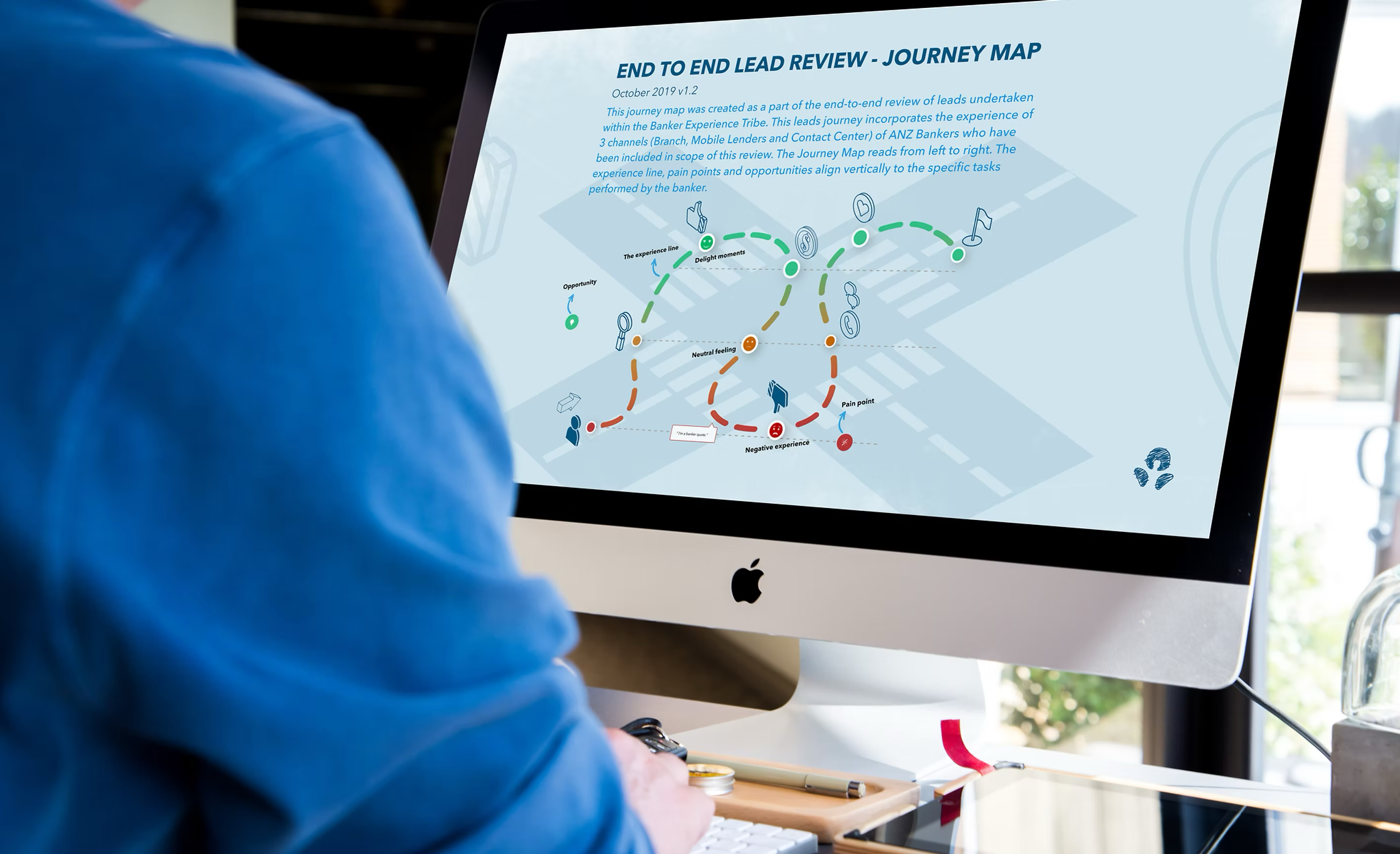
ANZ's marketing leads channel — the pipeline from inbound customer interest to banker engagement to account opening — was well understood in parts but had never been mapped end-to-end. Individual squads understood their piece. No one owned the whole picture.
This engagement was a strategic research project: embedded in ANZ's Business Banking team, tasked with producing a comprehensive end-to-end journey map that would become the shared reference point for multiple squads working across the leads lifecycle.
Context
A fragmented journey, invisible to any one team
When a business customer expresses interest in ANZ's banking products — whether through a digital enquiry form, a branch walk-in, or a referral — that lead enters a system involving multiple handoffs: from marketing to leads management, from leads management to a banker, from banker to product specialist, from specialist to processing.
Each of those handoffs was managed by a different team, on different systems, with different definitions of success. A lead "converted" in the marketing system might still be abandoned three steps later in the banking system. There was no single view of the customer's actual experience across that journey.
"When no one owns the full journey, the customer experiences the gaps. Our job was to make those gaps visible."
Methodology
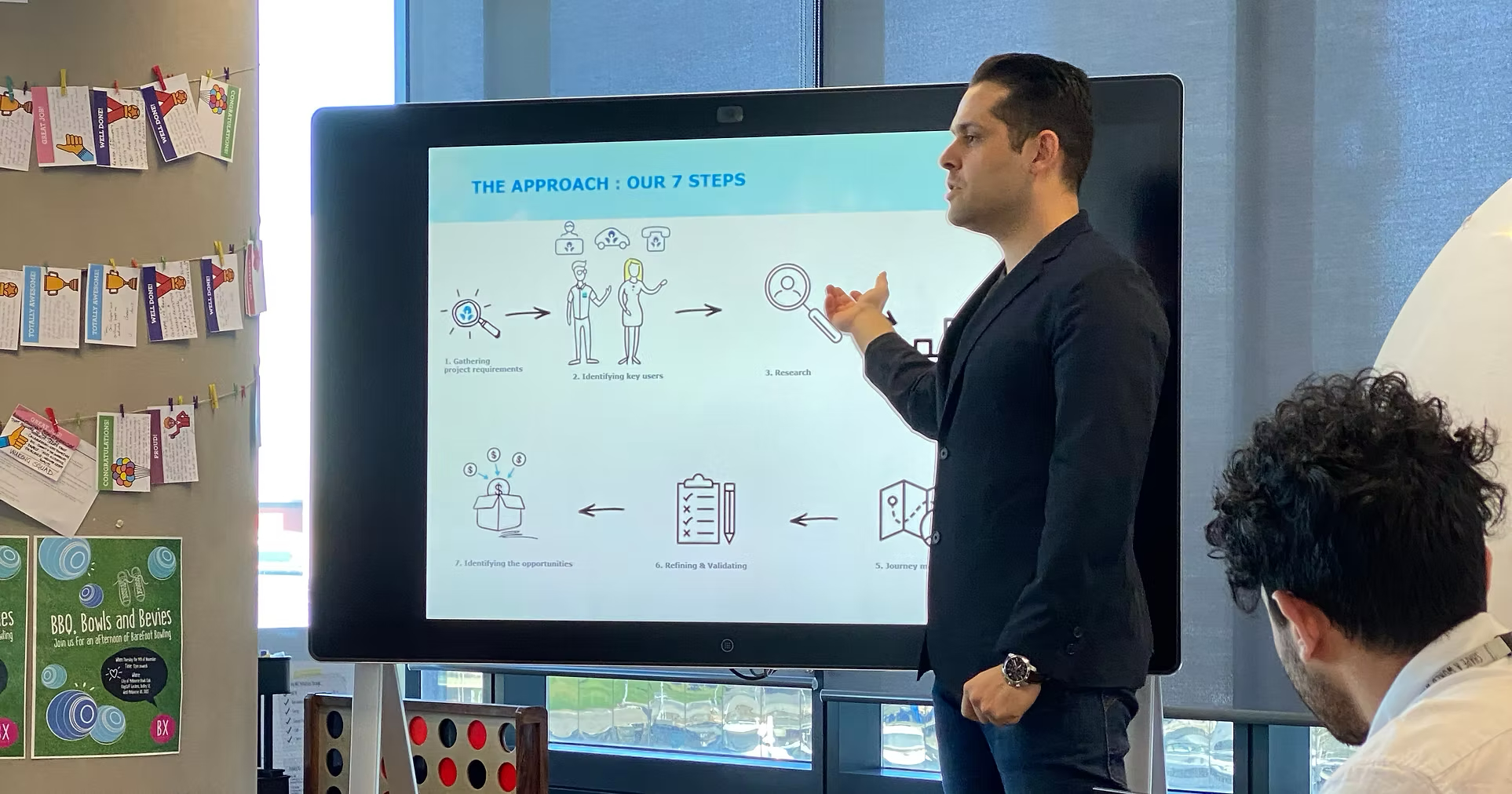
Research across channels and roles
The research required talking to multiple stakeholder groups — not just customers, but the bankers, leads managers, and processing staff who handled different parts of the journey. Each group had a different understanding of what "a good lead outcome" looked like, and surfacing those differences was as valuable as mapping the customer experience itself.
Methods used across the engagement:
Contextual inquiry with frontline bankers — observing lead handling in real time, identifying where bankers deviated from the official process and why.
Stakeholder interviews across squads — documenting each team's mental model of the leads flow and their definition of a successful handoff.
Customer journey interviews — retrospective accounts from customers who had recently gone through the leads-to-account process, across both successful and unsuccessful outcomes.
System walkthrough documentation — tracing the technical path a lead takes through ANZ's internal systems, identifying where data is lost or transformed between handoffs.
Key Findings
Where the journey broke — and why
The mapping process identified several critical failure points that were invisible when any individual team viewed only their segment of the journey:
Lead records were re-entered manually at two distinct handoff points, creating data quality issues and delays that customers experienced as being asked the same questions repeatedly.
The definition of "lead status" differed between the marketing system and the CRM — creating a measurement gap where leads appeared "active" in one system after being abandoned in the other.
Banker response time to new leads varied significantly — not due to workload alone, but due to ambiguity about which leads were priority and who owned follow-up accountability.
Customers who enquired digitally but ultimately converted in-branch were not tracked back to their original lead source — creating a systematic undercount of digital-channel attribution.
Output
A shared artefact that changed the conversation
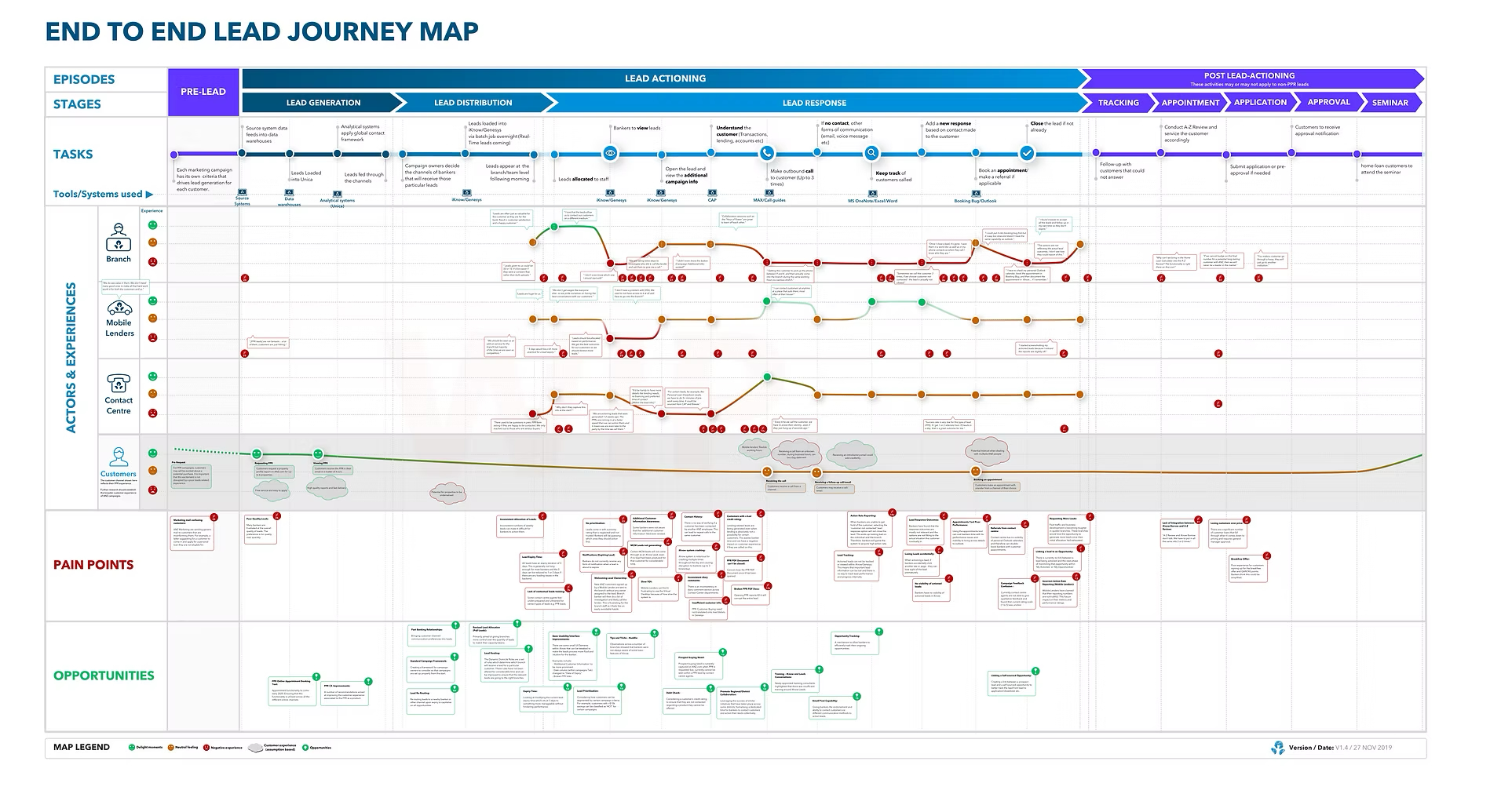
The primary output was a comprehensive end-to-end journey map — produced as both a detailed research artefact and an executive-ready summary — that became the shared reference across three squads. Beyond the map itself, the engagement produced a set of opportunity framing documents that prioritised the identified gaps by effort-to-impact ratio.
The value of this kind of strategic research engagement isn't just the findings — it's the alignment it creates. When multiple teams are working from the same map of reality, the quality of prioritisation conversations changes fundamentally.